
Winter Tyres vs. All-Season Tyres: Worthwhile Upgrade?
Let's talk tyres — the science, the differences, and local roads!
We’ve all been there. You wake up to a sharp frost, the insides of your windows are laced with ice, and you have to get from Battlefield to the town centre, or worse, tackle a rural lane out near Bayston Hill. You ease off the drive, tap the brakes at the first junction, and... slide. It’s that heart-in-your-mouth moment when you realise the cold, damp tarmac is as slick as an ice rink.
As your local mechanic here at Auto Tech Direct in Shrewsbury, the most common question we get from October onwards is: "Are winter tyres really worthwhile, or are my all-seasons good enough?". It’s a fantastic question. The answer isn't a simple yes or no. It depends on your car, your budget, where you drive, and how much you value peace of mind.
This is our definitive guide for drivers in Shrewsbury and Shropshire. We're going to break down the science, the cost, and the real-world performance to help you decide if the upgrade is worth it for you.
What Exactly is the Difference? (It's More Than Just Tread)
Most people think the difference between winter and all-season tyres is just the tread pattern. While that's part of it, the most critical difference is invisible: the rubber compound.
The 7°C Rule: The Only Number You Need to Know
This is the golden rule of tyre safety.
- Below 7°C: The rubber compound in all-season and summer tyres begins to harden. They stiffen up like an old eraser, drastically reducing their grip on the road.
- Below 7°C: Winter tyres are built with a special, high-silica compound that stays soft and pliable, even in freezing temperatures.
Think of it like this: trying to grip a cold road with a hard all-season tyre is like trying to pick up a coin while wearing rigid gardening gloves. A winter tyre is like a soft, flexible wool glove that can mould to every tiny imperfection in the road surface, giving you maximum grip. In a typical Shrewsbury winter, how often is the road surface temperature below 7°C on your morning commute? Almost every day from November to March.
The Tyre Compound: Flexibility = Grip
| Tyre Type | Rubber Compound | How it Behaves in the Cold (< 7°C) |
|---|---|---|
| All-Season | Standard compound | Hardens, becomes brittle, loses traction. |
| Winter | High-silica compound | Stays soft, flexible, and 'sticky'. |
The Tread Pattern: Biting vs. Skimming
This is the visible part.
- All-Season Tyres: Have relatively simple tread blocks designed to clear water in mild rain and provide decent dry grip. In snow, these blocks quickly clog up, turning your tyre into a smooth, useless "slick."
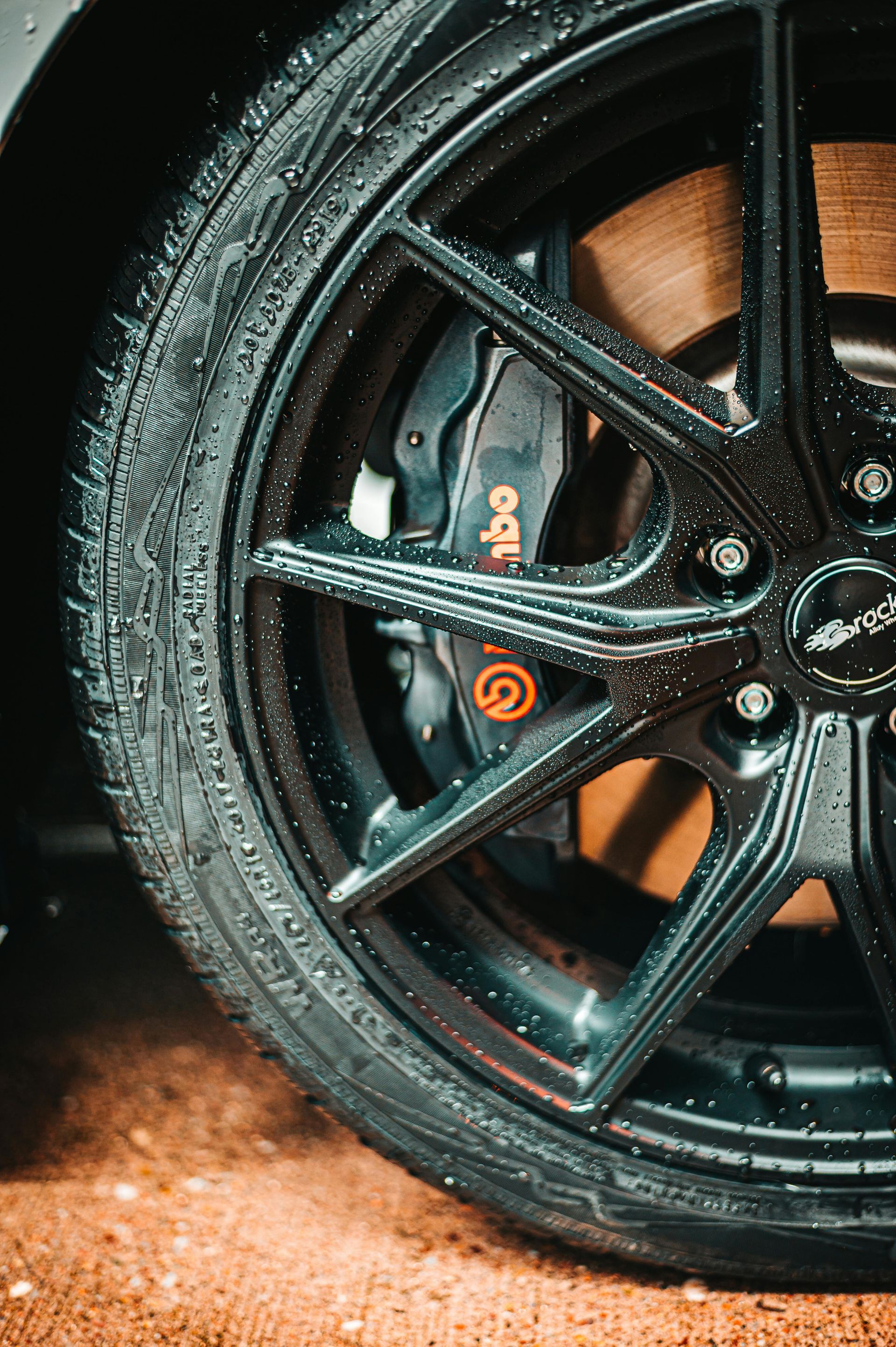
- Winter Tyres: Feature a deep, aggressive tread pattern with thousands of tiny, jagged slits called "sipes." These sipes act like thousands of tiny biting edges, clawing at the road surface. They grip snow, bite into ice, and are brilliant at channelling away slush and standing water to prevent aquaplaning.
Performance in the Real World: The Braking Test
Okay, so the science is clear. But what does that mean when you're driving down The Mount in icy conditions? It all comes down to braking distance.
Let's look at the data. According to safety experts and tyre manufacturers, the difference is staggering.
"On a snowy road at just 30 mph, a car with all-season tyres can take twice as long to stop as the exact same car fitted with winter tyres."
Read that again. Twice the distance.
That is the difference between stopping comfortably before a roundabout and sliding straight into the middle of it. On ice, the gap is even more significant. Winter tyres don't make you invincible, but they give you a critical, life-saving advantage.
The "Third Way": What About All-Weather Tyres?
This is where most of the confusion comes from. In the last few years, a new category has emerged: All-Weather Tyres.
- All-Season Tyres: The "jack-of-all-trades, master of none." They are really "three-season" tyres, best suited for spring, summer, and autumn. They are not designed for snow or ice.
- All-Weather Tyres: (e.g., Michelin CrossClimate, Goodyear Vector 4Seasons). These are a true hybrid. They are designed to be used all year round, but they also feature a compound and tread that are certified for winter use.
You can identify a true all-weather tyre by a symbol on its sidewall: the Three-Peak Mountain Snowflake (3PMSF). This means it has met a minimum legal standard for performance in snow. How do they stack up?
- vs. All-Season: All-Weather tyres are vastly superior in winter. It's not even a contest.
- vs. Winter: A dedicated winter tyre will still outperform an all-weather tyre in deep snow or on sheer ice. But for the typical "cold, wet, greasy, sometimes snowy" UK winter, they are a fantastic compromise.
The "Shrewsbury Factor": Is It Worthwhile Here?
This is the most important section for our customers. We're not driving in the Alps, so do we really need them in Shropshire?
Our expert opinion at Auto Tech Direct is yes, for many of us, the upgrade is absolutely worth it. Here’s why:
1. Shropshire's Rural Roads and B-Roads
Shrewsbury is the gateway to a very rural county. If you live in a village or have to commute on B-roads (think the roads out to Condover, Nesscliffe, or Church Stretton), you know they are sometimes the last to be gritted, if at all. These roads are treacherous with black ice, frost, and slush. Winter tyres are designed for precisely these "less-than-perfect" conditions.
2. Hills, Inclines, and Tricky Junctions
Shrewsbury isn't flat. Trying to get up Wyle Cop, pull away from the lights on Old Potts Way, or get out of a sloping driveway on a frosty morning can be impossible with the wrong tyres. The grip from winter or all-weather tyres provides the traction you need to simply... go.
3. The 'Cold and Damp' Reality
Our winter isn't about six feet of snow. It's about three solid months of temperatures ranging from -3°C to 6°C. It's cold, it's wet, and the roads are greasy. As we learned from the 7°C rule, this is precisely the window where all-season tyres stop working effectively, and winter tyres come into their own.
The Cost vs. Benefit Analysis
This is the final hurdle. "It sounds great, but it's expensive." Let's break down the real cost.
The Upfront Investment
Yes, a new set of winter or all-weather tyres is an investment. Depending on your car and wheel size, you can expect to pay between £400 and £800+ for a good-quality set.
The "Hidden" Saving: Doubling Your Tyre Lifespan
This is the part most people forget. When your winter tyres are on your car, your all-season/summer tyres are not.
You are not spending more on rubber; you are splitting the wear across two sets of tyres. Your £600 set of summer tyres that might have lasted three years will now last you six, because they are safely stored for half the year. Over the life of the car, the only actual extra cost is the seasonal changeover.
Ancillary Costs
- Fitting: You'll need to have your tyres swapped twice a year. Here at Auto Tech Direct, we offer a seasonal tyre swap and balance service for our customers. Please visit Tyre Fitting for more information.
- Storage: Where do you keep the set you're not using? You need a cool, dry place out of direct sunlight. Some drivers buy a second set of (cheaper) steel wheels to make swapping even easier.
What About Car Insurance?
This is a common myth. The Association of British Insurers (ABI) states that the vast majority of UK insurers do not require you to declare winter tyres, as they are a safety-related modification. It's always wise to double-check, but it should not affect your premium.
Our Final Verdict: The Auto Tech Direct Recommendation
So, is the upgrade worth it? Here is our final recommendation for Shrewsbury drivers. We've broken it down into three driver profiles. Which one are you?
🥇 Profile 1: The Rural & High-Mileage Driver
- You Are: A commuter who must get to work, a parent on the school run, or you live in a village or on a hill. You frequently drive on B-roads and country lanes.
- Our Verdict: Get a dedicated set of Winter Tyres. The safety and peace of mind are non-negotiable. You’ll have superior grip in all conditions, and you'll protect the lifespan of your "good" summer tyres.
🥈 Profile 2: The Town-Based Driver
- You Are: You mainly drive in and around Shrewsbury, sticking to the A-roads and main routes that are usually gritted. You can "wait out" the one day of heavy snow, but you drive daily in cold, wet conditions.
- Our Verdict: All-Weather Tyres (with the 3PMSF symbol) are your perfect solution. You get excellent year-round performance, fantastic cold and wet-weather safety, and you don't have the hassle of a seasonal swap. This is the ultimate "fit and forget" option for most UK drivers.
🥉 Profile 3: The Occasional & Fair-Weather Driver
- You Are: A low-mileage driver. You can work from home or take public transport if the weather is bad. Your car stays in the driveway during the worst of the winter.
- Our Verdict: You may be okay on your All-Season Tyres, but you must understand their limitations. You will have significantly less grip and longer braking distances below 7°C. You absolutely must avoid driving in snow or icy conditions.
Your Winter Safety Starts Here
Don't wait for the first frost—or the first slide—to think about your tyres. They are the only four patches of rubber, each the size of your hand, that connect your car to the road. As your local Shrewsbury experts, we're here to help. Pop into the Auto Tech Direct garage, and we'll give you a free, no-obligation tyre check. We can assess your current tread, check your tyre type, and discuss your driving habits. We'll give you an honest recommendation, not a sales pitch.
We can source, fit, and balance all major brands of winter and all-weather tyres to suit your budget.
You can call us today on 07368 491099 or visit us at Upper House Farm, Shrewsbury, SY5 9AG, to get your car winter-ready. If you would rather leave a message, feel free to visit our contact page.
Legal Disclaimer:
The information provided in this blog is for general informational purposes only and does not constitute professional automotive, legal, or safety advice. While we strive to offer accurate and up-to-date content, we make no warranties or guarantees regarding the completeness, reliability, or suitability of the information. Readers should consult a certified mechanic or relevant professional before taking any action based on this content. Under no circumstances shall we be held liable for any damages, losses, or legal claims arising from the use or misuse of the information presented here.