
The Ultimate Guide to Car Brakes in Shrewsbury
Why They Squeak, How They Work, and When to Call a Mechanic
When you are navigating the historic, winding streets of Shrewsbury, descending the steep incline of Wyle Cop, or braking suddenly on the A5 bypass, the absolute last thing you want to worry about is your car's ability to stop safely. Your vehicle's braking system is its most critical safety feature, standing directly between you, your family, and a potential accident.
Despite this, many drivers only think about their brakes when they hear a terrifying grinding noise or fail an MOT. But how much do you actually know about what happens when you press that pedal?
At Auto Tech Direct, based locally at Upper House Farm in Shrewsbury, we believe that educated drivers are safer drivers. Whether you're commuting from Bayston Hill, tackling the stop-start traffic near Meole Brace, or navigating narrow, muddy Shropshire country lanes, understanding your brakes can save you hundreds of pounds and keep you safe on the road.
Here is your complete, in-depth guide to how your car’s brakes work, the different types of braking systems, the warning signs that it’s time for a repair, and how you can make your brake pads last longer.
The Science of Stopping: How Do Car Brakes Actually Work?
To understand how your brakes work, we need a quick physics lesson. When your car is moving, it has a massive amount of kinetic energy. To stop the car, your brakes have to convert that kinetic energy into thermal energy (heat) using friction.
Here is the step-by-step process of what happens in the split second you press the brake pedal:
- The Master Cylinder: When your foot pushes the brake pedal down, it drives a piston inside a component called the master cylinder.
- Hydraulic Pressure: This piston forces incompressible hydraulic brake fluid through a complex network of sealed pipes and flexible hoses down to each of your four wheels.
- The Clamping Force: Because brake fluid cannot be compressed, the exact pressure your foot applies is instantly and evenly transferred to the braking mechanisms at the wheels.
- Friction and Heat: The hydraulic pressure forces a friction material (the brake pad or shoe) against a spinning piece of metal attached to your wheel. The resulting friction slows the wheel down, generating temperatures that can exceed 200°C (392°F) in normal town driving, and much higher under heavy braking!
Because stopping a vehicle generates an incredible amount of heat, the biggest job of any braking system is cooling down quickly so it doesn't overheat and fail—a terrifying and dangerous situation known as "brake fade."
The Main Types of Car Brakes Explained
Modern vehicles typically use a combination of two different braking systems, paired with electronic safety nets, to get the job done efficiently.
1. Disc Brakes (The Front Heavy-Lifters)
Imagine the brakes on a standard bicycle, where rubber pads squeeze a spinning metal wheel. Disc brakes work on a similar, albeit vastly more powerful, hydraulic principle. A heavy-duty clamp called a caliper squeezes high-friction brake pads against a flat, spinning cast-iron disc called a rotor.
- Why we use them: Because they are exposed to the open air rushing past the car, disc brakes cool down incredibly fast and shed water easily on rainy Shropshire days. Because the front of your car handles up to 90% of the stopping force when the vehicle's weight shifts forward during braking, virtually all modern cars feature disc brakes on the front wheels. Many modern cars now use them on all four wheels.
2. Drum Brakes (The Reliable Rear Guard)
Instead of an exposed flat disc, drum brakes feature a hollow, bowl-shaped cast-iron drum that spins with the wheel. When you apply the brakes, hydraulic pressure inside a "wheel cylinder" pushes curved brake shoes outward, pressing them against the inside of the spinning drum to create friction.
- Why we use them: While they don't cool down quite as fast as disc brakes, drum brakes are highly durable, cost-effective to manufacture, and make an excellent, long-lasting setup for the rear wheels of smaller cars, which handle much less of the overall braking load.
3. ABS (Anti-lock Braking System)
While not a physical brake type, ABS is a crucial electronic system tied to your brakes. If you slam on the brakes on a wet or icy road in Shrewsbury, your wheels might lock up, causing the car to skid uncontrollably. ABS uses sensors to detect when a wheel is about to stop spinning entirely. It automatically "pumps" the brakes up to 15 times a second—faster than humanly possible—allowing you to maintain steering control while executing an emergency stop.
Brake Pad Materials: Not All Pads Are Created Equal
When it comes time to replace your brake pads at Auto Tech Direct, the material of the pad plays a huge role in performance, noise, and longevity.
- Organic Brake Pads: Made from a mixture of glass, rubber, and heat-resistant resins. They are the softest, quietest, and most affordable option, but they wear out the fastest and create the most brake dust on your alloy wheels.
- Semi-Metallic Brake Pads: Made of 30% to 65% metal (copper, iron, steel) mixed with friction modifiers. These are incredibly durable, offer fantastic stopping power, and dissipate heat brilliantly. They are the most common pad on the road, though they can occasionally be noisy.
- Ceramic Brake Pads: The premium choice. Made from dense ceramic clay and copper fibers. They are incredibly quiet, produce almost zero visible brake dust, and last a very long time. However, they are the most expensive option.
Driving in Shrewsbury: Why Your Brakes Work Overtime
The mechanical realities of brake wear don't happen in a vacuum. Your local environment dictates how fast your brakes degrade, and driving in Shropshire presents some unique challenges that wear brakes out faster than highway driving:
- Topography & Steep Hills: Negotiating steep drops in and around town, or taking a weekend drive out towards the Long Mynd, requires "riding" the brakes to control your descent speed. This constant friction builds up immense heat, cooking the brake pad material and causing it to glaze or wear out prematurely.
- Stop-Start Town Traffic: The medieval layout of Shrewsbury's town centre, combined with the River Severn loop, often leads to heavy stop-start congestion during rush hour. This constant, low-speed, high-frequency braking grinds down pad material quickly.
- The Pothole Crisis: Hitting a deep Shropshire pothole does more than just damage your tyres and suspension. The kinetic shock can throw your wheel alignment completely off. When wheels are misaligned, your brake calipers sit at the wrong angle, causing uneven brake pad wear, steering wheel vibrations, and significantly reduced stopping power.
7 Warning Signs You Need Urgent Brake Repairs
Never ignore what your car is trying to tell you. If you are experiencing any of the following symptoms, it's time to visit a local mechanic immediately:
- High-Pitched Squealing: This is actually an intentional warning design! Modern brake pads have a tiny metal indicator tab. When the pad gets dangerously thin (around 2mm-3mm left), this tab scrapes against the metal rotor to make a high-pitched squeaking noise. It means you need a routine pad replacement soon.
- Harsh Metallic Grinding: If the squeal turns into a deep, harsh, gravelly grind, your brake pads are completely gone. The metal backing plate is now gouging and destroying your brake rotor. Do not drive the car normally. Call us immediately, as this dramatically compromises your ability to stop safely.
- Vibration or Shaking: If your steering wheel or brake pedal shudders or pulsates violently when slowing down, your brake rotors have likely "warped" (become uneven) due to extreme heat, or you have severe suspension damage from a pothole.
- Pulling to One Side: Does your car aggressively dive to the left or right when you hit the brakes? This usually means a brake caliper has seized on one side, or a hydraulic brake hose is blocked or leaking.
- A "Spongy" Brake Pedal: If your brake pedal feels soft, squishy, or sinks all the way to the floorboard before the car starts slowing down, there is likely air or moisture trapped inside your hydraulic lines, or a fluid leak. This is a critical safety failure.
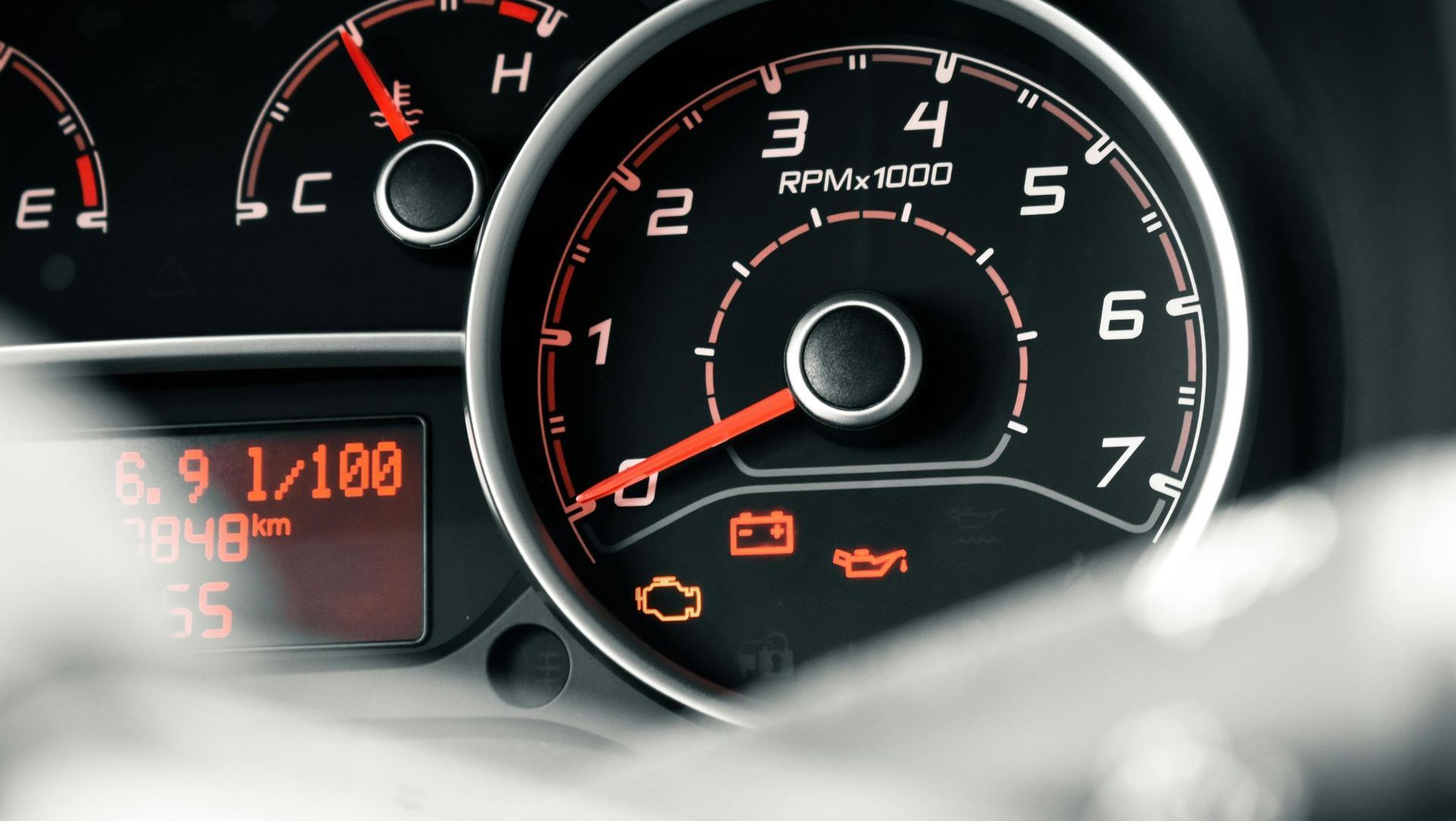
- Dashboard Warning Lights: If your ABS light or the red exclamation mark (!) brake light illuminates on your dashboard, your car's computer has detected a serious fault, low fluid levels, or failing sensors.
- A Burning Chemical Smell: If you smell a sharp, acrid chemical odor after a steep descent or heavy braking, your brakes are overheating. Pull over safely, allow them to cool down, and have them inspected.
The Hidden Danger: Your Brake Fluid
Did you know that brake fluid is "hygroscopic"? This means it naturally absorbs water from the air over time. Even in a tightly sealed system, microscopic moisture finds a way in. This water lowers the boiling point of the fluid (leading to that dangerous "spongy" pedal when the fluid gets hot and boils) and causes the internal metal brake lines to rust from the inside out.
Industry standard dictates that your brake fluid must be completely flushed and replaced every 2 years or 24,000 miles. If you can't remember the last time yours was changed, you are overdue.
Pro Tips: How to Make Your Brakes Last Longer
Want to save money and visit the garage a little less often? Follow these driving habits to extend the life of your brake pads and rotors:
- Coast to a Stop: Anticipate traffic lights and junctions. Take your foot off the accelerator early and let the car's natural drag slow you down before applying the brakes.
- Engine Braking: If you drive a manual car, shift down through the gears when descending steep Shropshire hills. Let the engine's compression control your speed rather than riding the brake pedal the whole way down.
- Drop the Excess Weight: The heavier your car, the harder your brakes have to work to stop it. Clear out heavy, unnecessary items from your boot.
- Flush Your Brake Fluid: As mentioned above, fresh fluid keeps the internal calipers and cylinders working smoothly, preventing them from seizing up and dragging the brake pads against the rotors.
Trust Auto Tech Direct for Your Brake Repairs in Shrewsbury
Dealing with car trouble is stressful, but getting it fixed shouldn't be. At Auto Tech Direct, we pride ourselves on absolute transparency and unmatched customer service. We operate on a strict "fix only what needs fixing" policy, meaning no hidden fees, no confusing mechanical jargon, and absolutely no unnecessary upsells.
When you bring your car to us, we provide a comprehensive inspection of your pads, rotors, calipers, and hydraulic lines, explaining exactly what is wrong before we touch a wrench.
- Free, No-Obligation Quotes: Use our Quick Estimate Tool online. Just provide your registration number and tell us your symptoms, and we'll send you a clear, honest price.
- Premium Parts: We only use high-quality, OEM-equivalent brake components to ensure your car stops safely and quietly for miles to come.
- Ultimate Convenience: Can't get time off work? We understand. Take advantage of our free courtesy car, or our bespoke vehicle collection and delivery service right here in Shrewsbury. We'll pick your car up from your home or office, fix the brakes, and drop it back to you.
- MOTs & Servicing: Worried about an upcoming MOT test? Faulty brakes, worn pads, or damaged rotors are an instant MOT fail. Book a comprehensive service or pre-MOT inspection with us, and we'll ensure your braking system is fully compliant, legal, and safe.
Dashboard brake light on? Hearing a grinding noise? Don't risk total brake failure on the road.
📍 Visit our garage: Upper House Farm, Shrewsbury, SY5 9AG
📞 Call our expert mechanics today: 07368 491099
💻 Book Online: Request a Free Quick Brake Estimate Here
Drive safely, Shrewsbury! Let the local experts at Auto Tech Direct take the stress out of your car maintenance.
Legal Disclaimer:
The information provided in this blog is for general informational purposes only and does not constitute professional automotive, legal, or safety advice. While we strive to offer accurate and up-to-date content, we make no warranties or guarantees regarding the completeness, reliability, or suitability of the information. Readers should consult a certified mechanic or relevant professional before taking any action based on this content. Under no circumstances shall we be held liable for any damages, losses, or legal claims arising from the use or misuse of the information presented here.